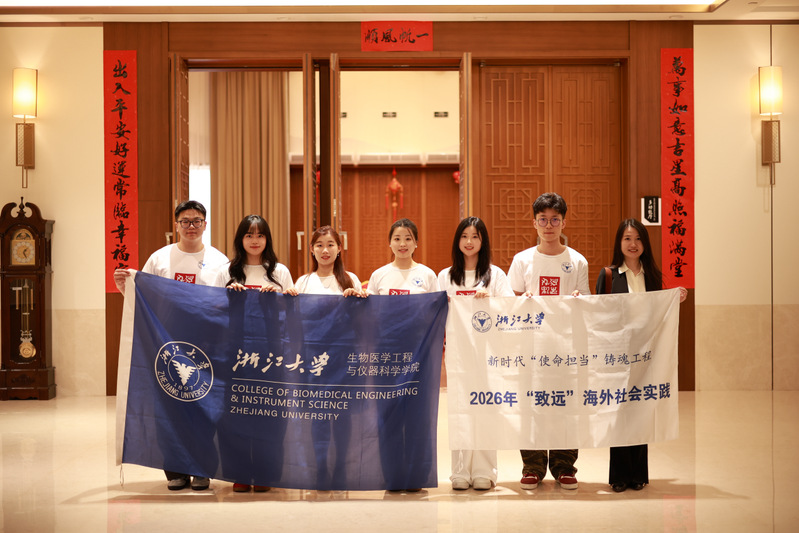
In August 2026, the College of Biomedical Engineering & Instrument Science (CBEIS), Zhejiang University, organized a social practice delegation to Belarus and Germany for a series of exchange and field-study activities. Centered on diplomatic engagement, academic exchange, industry research, and cultural exchange, the delegation visited the Embassy of the People's Republic of China in the Republic of Belarus, the Belarusian State University of Informatics and Radioelectronics (BSUIR), the Technical University of Munich (TUM), the China–Belarus Industrial Park Great Stone, and the China Cultural Center in Minsk, among other institutions and organizations. In particular, the delegation conducted academic exchanges at BSUIR and TUM.
Belarusian State University of Informatics and Radioelectronics: Exploring Innovation Through Academic Dialogue
BSUIR is a university with particular strengths in information technology, radioelectronics, communications engineering, and related engineering disciplines. Its academic profile provides a strong foundation for exchange with CBEIS in such areas as biomedical engineering, intelligent instrumentation, and the integration of medicine and engineering.
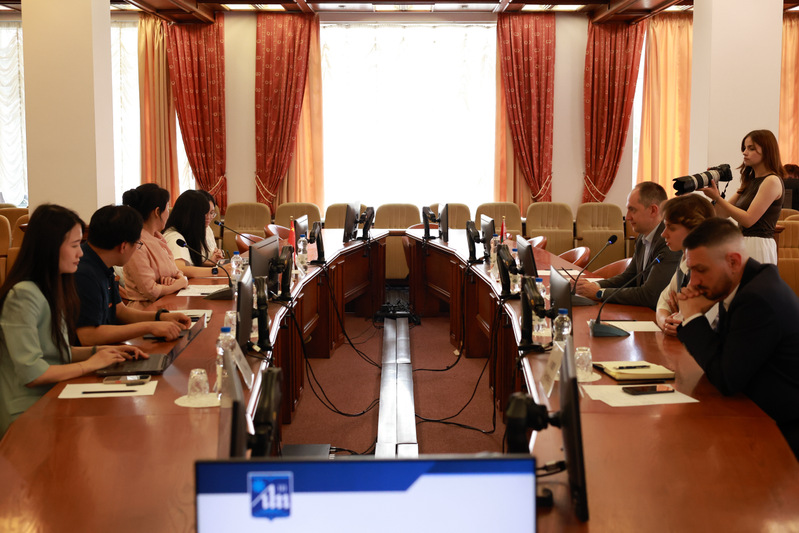
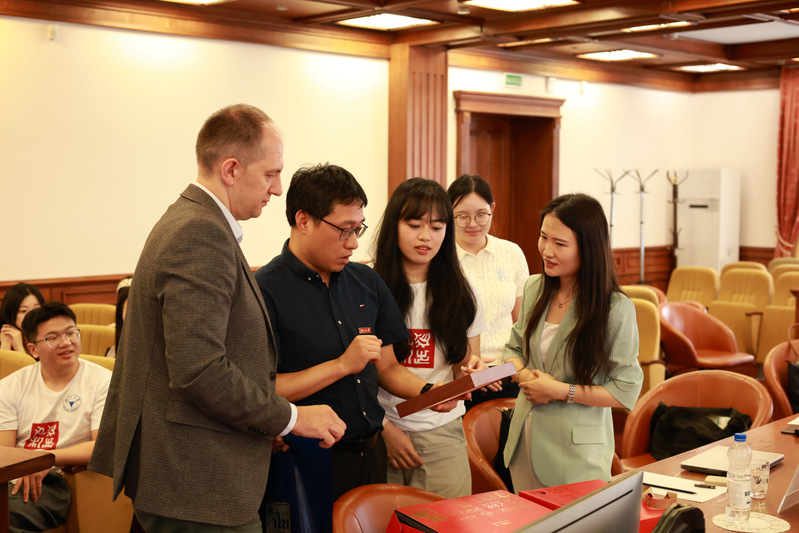
On the morning of August 5, the delegation visited BSUIR for a tour and academic exchange. Representatives of both sides introduced the development history, disciplinary landscape, talent cultivation, and research directions of their respective institutions, followed by discussions on information technology, radioelectronics, biomedical engineering, and the development of advanced medical devices. The exchange went beyond general introductions to the institutions and their disciplines, extending to topics such as the development of research platforms, approaches to engineering education, and pathways for translating technological achievements into practical applications.
As a faculty representative, Ms. Xia Jing delivered an academic presentation introducing the technical pathways and practical experience involved in preclinical research, prototype development, and performance validation for advanced medical devices. The presentation demonstrated CBEIS's research foundation in interdisciplinary medicine–engineering integration and advanced medical device development, while also laying the groundwork for identifying potential points of alignment for collaborative research projects and promoting further exchanges between the two sides.
During the academic exchange session, student representatives from the delegation delivered an English-language presentation on the research topic of “platelet mechanical memory,” introducing relevant research progress and perspectives and demonstrating the academic competence of CBEIS students in interdisciplinary biomedical engineering. Faculty members and students from both sides subsequently engaged in a question-and-answer session on topics including research collaboration, talent cultivation, and student exchange, further deepening their mutual understanding through professional discussion.
Technical University of Munich and the Jülich Centre for Neutron Science: Experiencing the Innovation Ecosystem at the Forefront of European Research
The Technical University of Munich has distinctive strengths in engineering and technology, the life sciences, and research translation. Its Munich Institute of Biomedical Engineering (MIBE) focuses on interdisciplinary frontiers spanning engineering, the life sciences, and medicine, with research covering the full chain from fundamental research, biomedical imaging, and intelligent sensing to health-related applications. The Heinz Maier-Leibnitz Zentrum (MLZ), meanwhile, is an open research platform jointly supported by TUM, Forschungszentrum Jülich, and other Helmholtz research institutions for scientific use. It provides neutron scattering and imaging capabilities for research in physics, chemistry, biology, materials science, engineering, and related fields.
On August 13, the delegation traveled to Munich, Germany, where it visited TUM and the Heinz Maier-Leibnitz Zentrum (MLZ), which is jointly associated with TUM and Forschungszentrum Jülich. Faculty members and students exchanged views on biomedical engineering, medical imaging, intelligent sensing, and the translation of research outcomes, gaining insight into how teams from different disciplines collaborate around health-related challenges and how universities connect fundamental research, engineering technologies, and practical needs through shared research platforms.
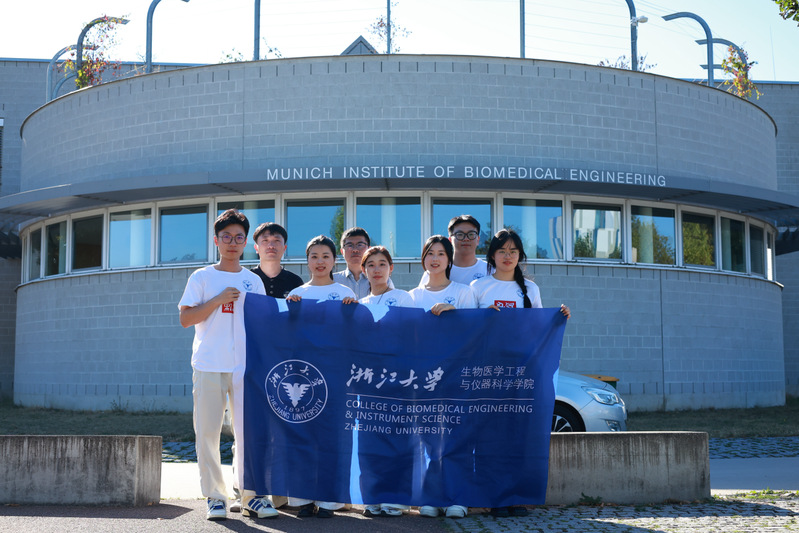
Drawing on their respective research interests, members of the delegation delivered English-language presentations on topics including disease screening based on nanomaterial-enhanced surface acoustic wave sensor arrays and targeted delivery of transition metal ions for the treatment of bacterial infections. The presentations covered topics such as clinical needs for disease screening, principles of biosensing, nanomaterial design, device optimization, and portable detection systems, showcasing Zhejiang University students' exploration at the intersection of biomedical engineering, materials science, sensing technologies, and intelligent algorithms. Addressing audiences from diverse disciplinary backgrounds, the presenters actively explained the boundaries of the technologies and their application scenarios and engaged in discussions on experimental design, signal detection, material performance, and research translation.
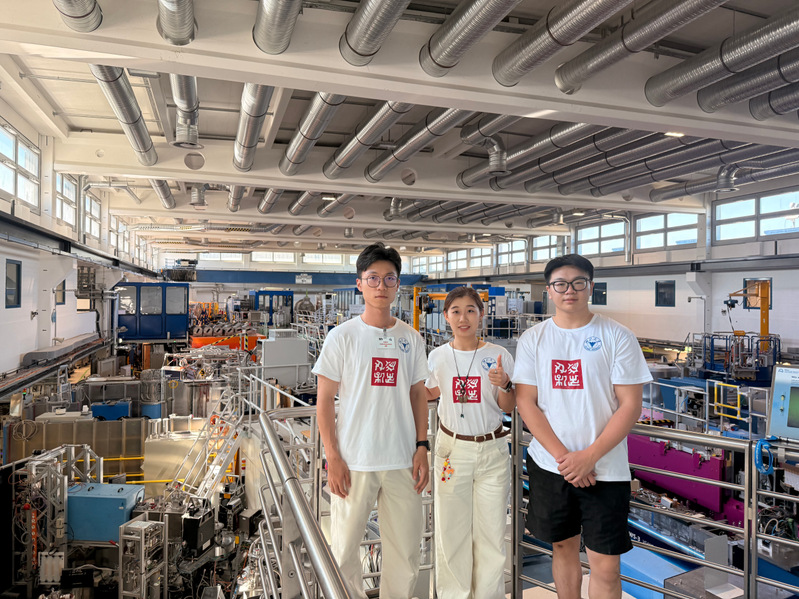
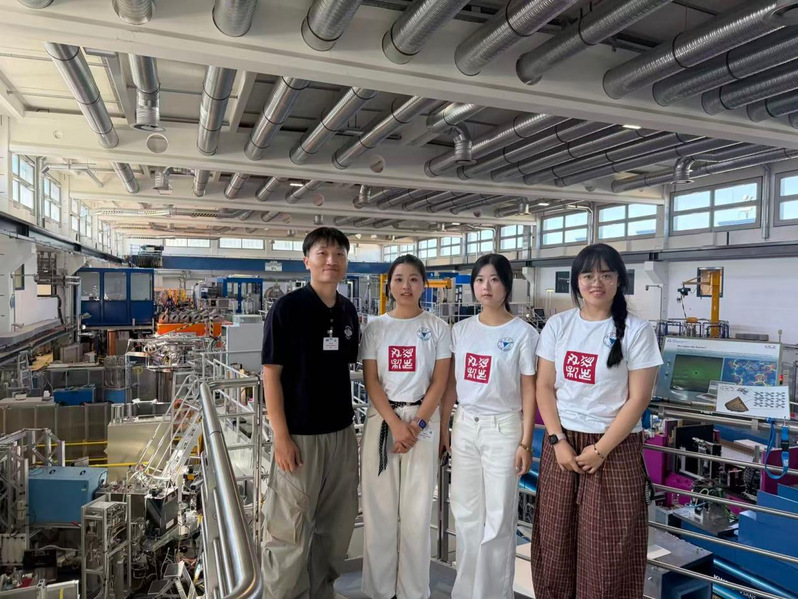
At Forschungszentrum Jülich, researchers introduced the delegation to the operation and application of major research facilities for neutron scattering, neutron imaging, X-ray diffraction, and X-ray scattering. During visits to the experimental areas, the students gained a direct understanding of the scale, instrumentation, and operational management of large-scale scientific facilities. They also came to appreciate that high-level research depends not only on specific research topics and experimental methods, but also on stable and open shared platforms, rigorous and standardized research management, and long-term collaboration across institutions and disciplines. This platform-based and collaborative model of organizing scientific research provided new perspectives for the students' future studies and research.