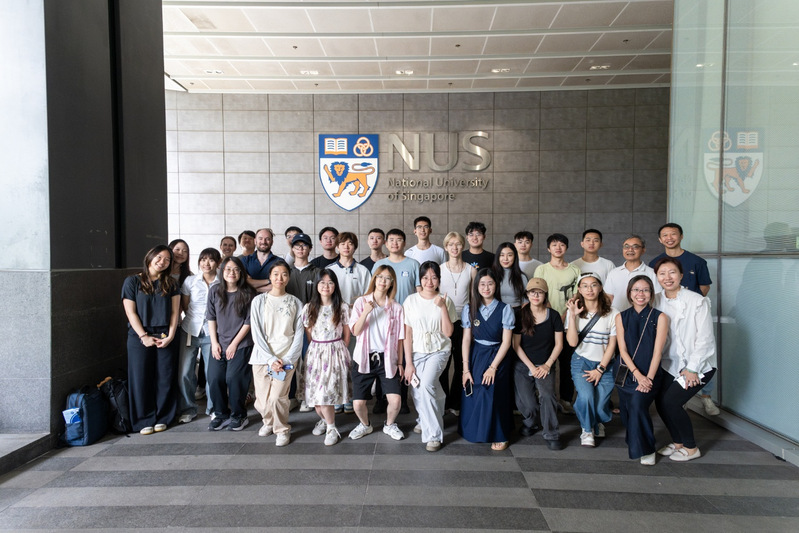
From August 3 to 9, 2026, a group of students from our university participated in a short-term academic exchange programme at the National University of Singapore (NUS). Centered on Biomedical Engineering (BME), the exchange featured campus tours, laboratory visits, academic lectures and seminars on medical technology innovation. Immersed in the frontlines of research at a world-class international university, students gained in-depth insights into research and applications spanning tissue engineering, bio-robotics, biomechanics, mechanobiology and biomedical imaging. Direct exposure to diverse research tracks significantly broadened their academic horizons.
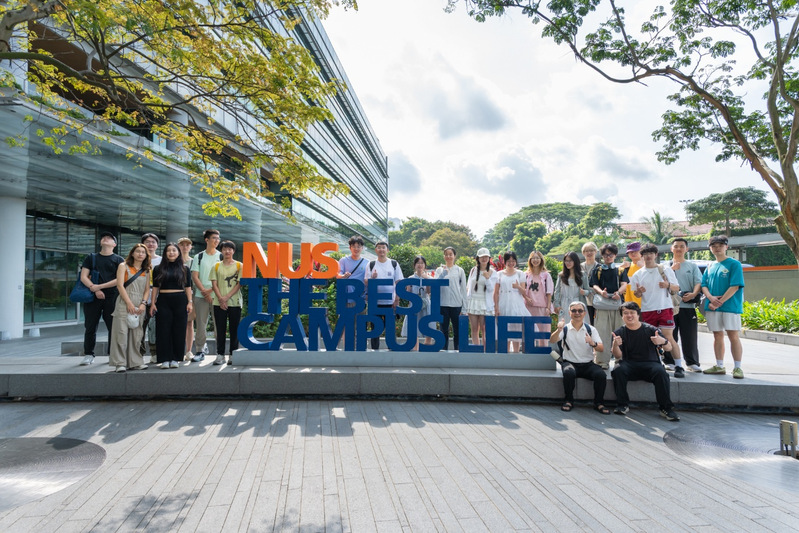
Deep Dive into Research Laboratories: Uncovering Interdisciplinary Pathways in Medical Engineering
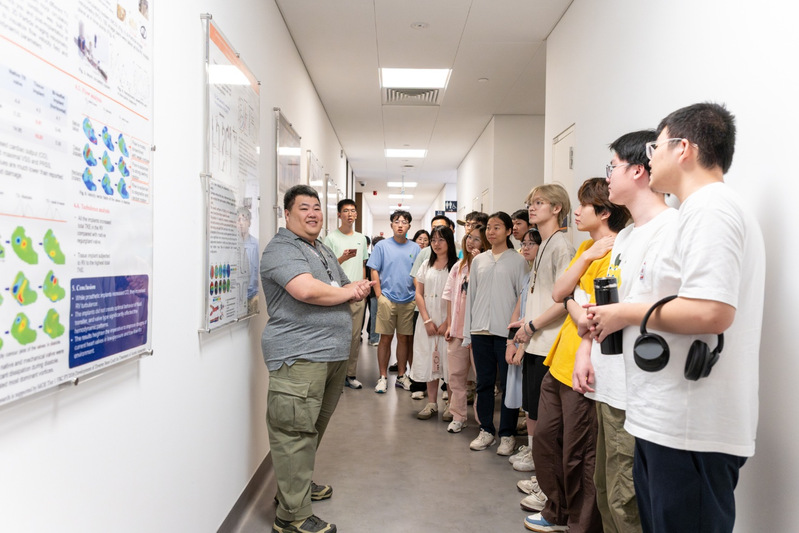
During visits to laboratories within the BME Building, students toured three core facilities focusing on Tissue Regeneration, Bio-Robotics and Biomechanics respectively.
At the Tissue Regeneration Laboratory, students learned about research in tissue engineering and regenerative medicine. On-site demonstrations illustrated that biomedical engineering addresses clinical challenges by integrating materials science, cell biology and engineering techniques to solve problems related to tissue repair and regeneration. This hands-on experience brought textbook concepts of interdisciplinary medical engineering to life for the participants.
The Bio-Robotics Laboratory introduced the fusion of robotic technology and biomedical engineering. Advanced lab equipment and research prototypes demonstrated how traditional engineering methodologies can be adapted to address human physiology, motor function and clinical demands, carving out brand-new research avenues. For students with varied academic interests, these cross-disciplinary breakthroughs offered fresh perspectives on potential career paths within biomedical engineering.
At the Biomechanics Laboratory, students examined testing equipment and experimental protocols used to analyze human kinematics. Observing live research setups enabled them to connect theoretical mechanics coursework with real-world applications in rehabilitation engineering and sports medicine, highlighting the practical value of biomechanical research.
Visits to the three labs collectively conveyed that biomedical engineering is not a monolithic discipline. It encompasses tissue regeneration, intelligent robotics, biomechanics and numerous other subfields. Though each track employs distinct tools and targets unique research subjects, all converge on addressing critical challenges in human health—a key takeaway students gained from the laboratory tour series.
From Lab Research to Marketable Products: Witnessing the Translation of Innovative Research
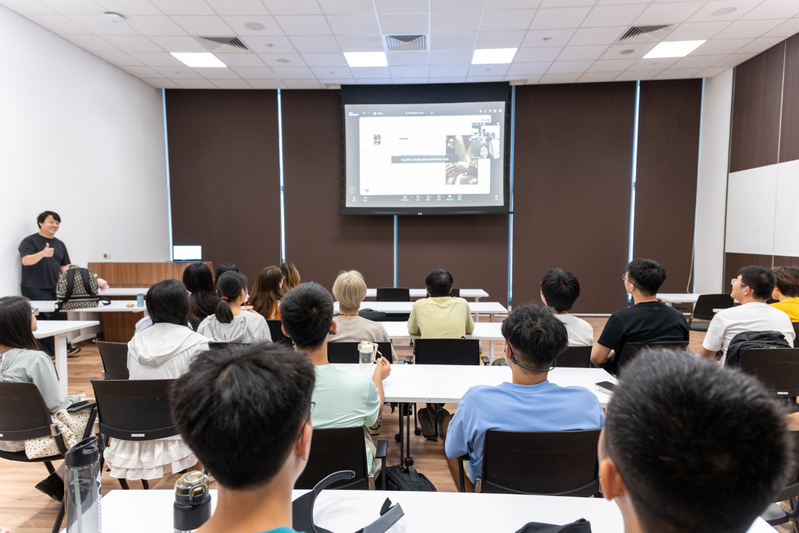
Following the laboratory visits, Dr. Ernest invited an affiliated startup team to hold a discussion with the students, presenting a smart wearable bracelet designed to mitigate hot flashes in Asian women experiencing menopause.
Unlike purely theoretical lab research showcases, this session offered a tangible case study of research translation. The product evolved from an initial academic concept to a fully developed solution targeting specific women’s health concerns. It illustrated that the value of biomedical engineering extends far beyond academic papers and laboratory experimentation: technical development and product design can directly respond to unmet public health needs.
The case study also clarified the comprehensive skill set required of biomedical engineering professionals. Mastery of foundational theory and research methodology is essential, yet practitioners must also identify unaddressed clinical and wellness demands and devise strategies to translate lab discoveries into viable real-world solutions. The dialogue provided invaluable first-hand insight for students aspiring to pursue research innovation and technology commercialization.
Attending Cutting-Edge Lectures: Expanding Perspectives in Engineering Biology
On the afternoon of August 5, students attended an academic lecture delivered by Professor Shery Huang from the University of Cambridge, titled Multiscale Biofabrication for Engineering Biology.
Centered on multiscale biofabrication and engineering biology, the presentation outlined fabrication strategies operating across biological scales and their associated research advancements. Beyond introducing specific research projects, the lecture equipped students with a macro lens through which to view emerging frontiers in biomedical engineering.
Exploring multiscale biofabrication demonstrated how modern biomedical engineering integrates manufacturing technology, biological science and engineering methodologies. Technical approaches spanning microscale biological structures to large-scale tissue constructs collectively advance life science and medical inquiry. This cross-scale, interdisciplinary research framework reshaped students’ understanding of prospective academic and research trajectories.
After the lecture, the group proceeded to the Mechanobiology Laboratory to investigate research on cellular perception and response to mechanical stimuli. Paired with their earlier Biomechanics Laboratory tour, this visit built a cohesive understanding of how mechanical physical forces regulate biological activity, highlighting the interconnectedness of diverse subdisciplines within biomedical engineering.
Touring Advanced Core Research Platforms: Mastering Modern Biomedical Research Technology
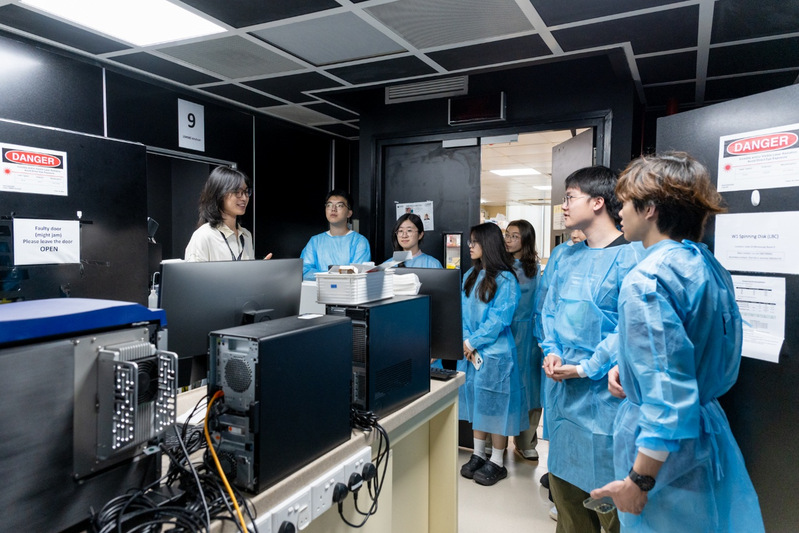
On the morning of August 6, students visited the Microscopy Cluster and Flow Cytometry Laboratory.
The Microscopy Cluster integrates multiple technical platforms including histology stations, confocal microscopes, multiphoton microscopes and electron microscopes. Demonstrations of each device illustrated the unique strengths of different imaging modalities in terms of observation scale, imaging mechanisms and research applications.
This segment deepened students’ comprehension of observation and measurement workflows in biomedical research. Microscopic structures of cells and tissues covered in coursework can only be visualized and quantified using tiered imaging technologies; the complementary functions of varied microscopy systems underscored the irreplaceable role of centralized core facilities in contemporary biomedical investigation.
Subsequent visits to the Flow Cytometry Laboratory covered applications of flow cytometry in cellular analysis, cell sorting and immunophenotyping. Combined with insights from the microscopy cluster tour, the session reinforced that modern biomedical research relies equally on rigorous theoretical design and state-of-the-art analytical infrastructure.
Engaging with Medical Tech Innovation: Exploring Real-World Applications of Research
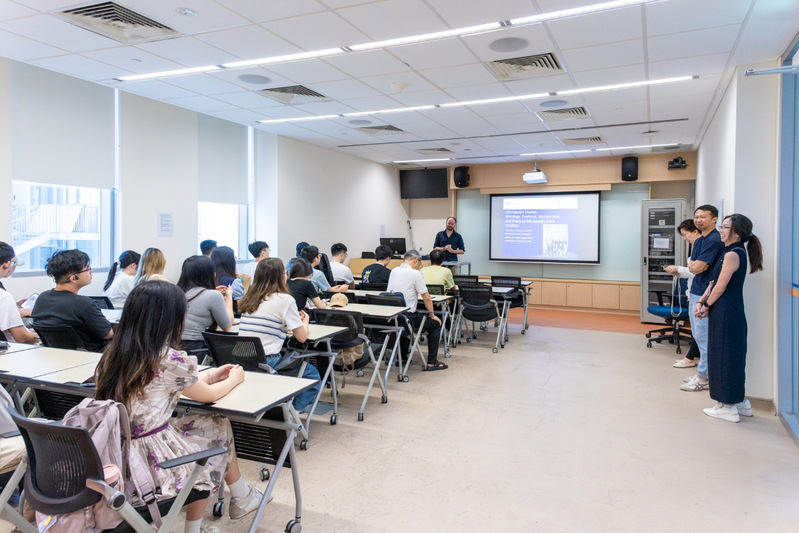
On the afternoon of August 6, the students visited iHealthTech to explore research and innovation within health technology.
On-site exchanges covered developments in smart medical devices and digital health, offering an industry-focused perspective on medical technology innovation. Whereas prior laboratory visits centered on fundamental research, this tour illuminated an alternative pathway for translating academic discoveries into solutions addressing real-world healthcare demands.
Across the full spectrum of exchange activities—from foundational lab research and core technical platforms to commercial medical technology development—students traced a complete value chain for biomedical engineering research. This holistic journey crystallized their grasp of the discipline’s core identity: biomedical engineering acts as a bridge connecting fundamental research, engineering techniques and clinical healthcare needs.