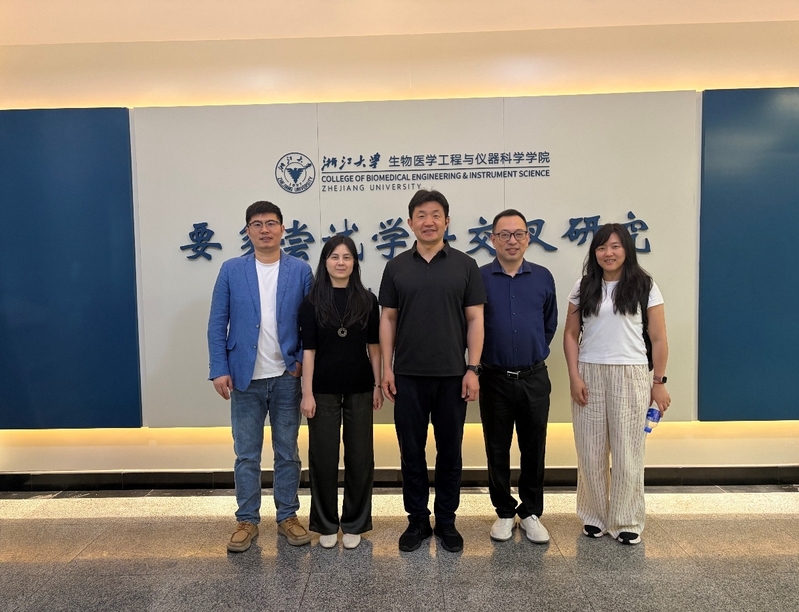
On June 15, 2026, the 42nd Lv Weixue Academic Forum, hosted by the College of Biomedical Engineering & Instrument Science (CBEIS), Zhejiang University, was successfully held at Teaching Building 6 on the Yuquan Campus. CBEIS was honored to invite Professor Li Zhou of Tsinghua University, a recipient of the National Science Fund for Distinguished Young Scholars and a Council Member of the Chinese Society of Biomedical Engineering, to deliver a talk titled Research Progress in Self-Powered Leadless Cardiac Pacemakers. The forum was hosted by Tian Liangfei, a Researcher under Zhejiang University's Hundred Talents Program.
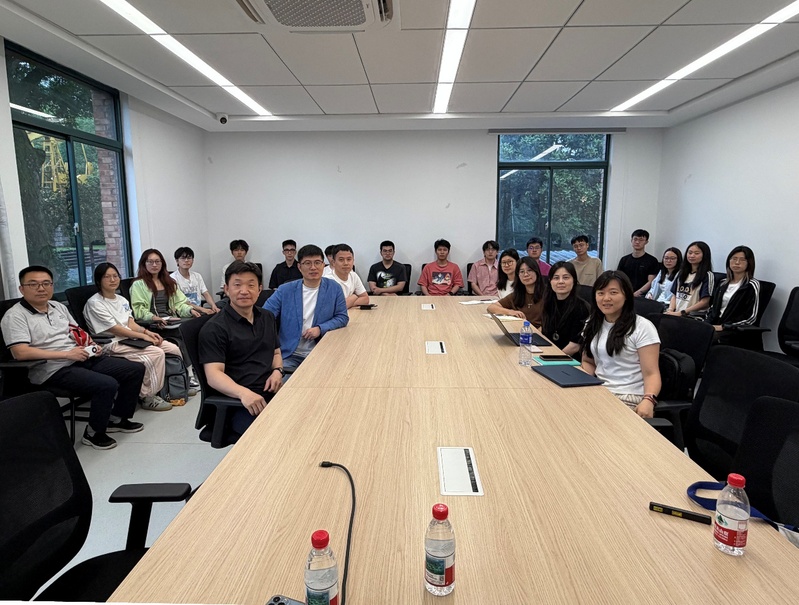
Professor Li Zhou gave a systematic overview of his team's groundbreaking advances in the field of self-powered cardiac pacemakers. He pointed out that cardiac pacemakers are an effective clinical intervention for arrhythmias. Although leadless pacemakers are regarded as a milestone innovation, their inherently limited battery life often requires patients to undergo repeated high-risk interventional replacement procedures, accompanied by significant risks of complications and medical burdens. To address this clinical challenge, the team adopted an alternative approach based on in vivo energy harvesting technology, capturing energy from the heart's own periodic mechanical movements and successfully developing a self-powered leadless cardiac pacemaker. The device can be precisely implanted into the cardiac chamber through a minimally invasive interventional procedure, establishing a closed-loop electrophysiological diagnosis and treatment paradigm integrating intracardiac biomechanical energy harvesting, conversion, and storage with electrical stimulation for arrhythmia regulation.
In his talk, Professor Li Zhou presented the core technological chain of this system in a stepwise manner. Through the integration of biomimetic structures and flexible electronics, the team enabled the pacemaker to efficiently convert physiological movements, such as myocardial contraction and the impact of blood flow within the cardiac chambers, into stable electrical energy, while completing energy management and on-demand release of stimulation pulses within a microscale space. In the validation stage, the research team successfully completed in vivo experiments in large animals lasting more than six weeks. Experimental data showed that, in animal models with induced malignant arrhythmias, the self-powered pacemaker could continuously and stably harvest biomechanical energy and maintain pacing function. All model animals safely passed the recovery period, with favorable physiological indicators, providing preliminary evidence of the in vivo safety and efficacy of the system.
Professor Li Zhou noted that this achievement is expected not only to fundamentally transform the treatment paradigm of periodic replacement for leadless pacemakers, but also to provide a generalizable technological approach to achieving energy self-sufficiency in next-generation implantable medical devices. Looking ahead, the team will focus on advancing long-term large-animal experiments and clinical translation research, accelerating the development of self-powered leadless pacemakers into a truly accessible permanent solution for patients with arrhythmias.