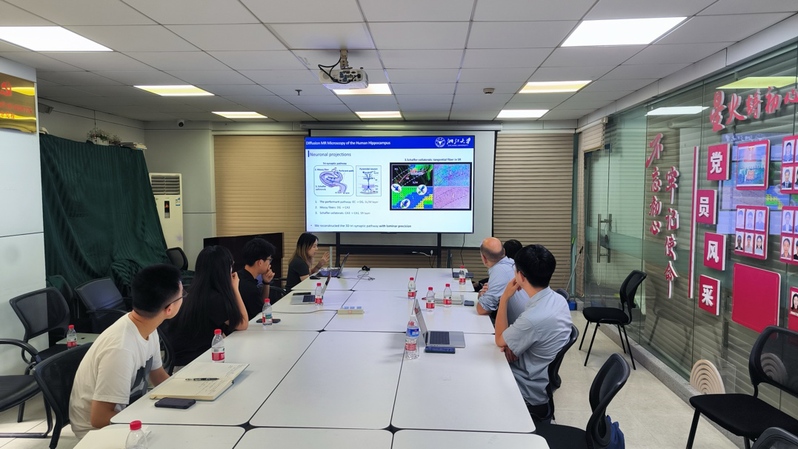
On May 28, 2026, the 41st Lv Weixue Academic Forum of the College of Biomedical Engineering & Instrument Science (CBEIS), Zhejiang University, was successfully held in the first-floor lecture hall of the Zhou Yiqing Science and Technology Building. The forum featured a special invited talk by Professor Paul Yushkevich from the Department of Radiology at the University of Pennsylvania as the keynote speaker. The forum was hosted by Professor Wu Dan, Vice Dean of CBEIS, with more than 30 faculty members and students attending the event.
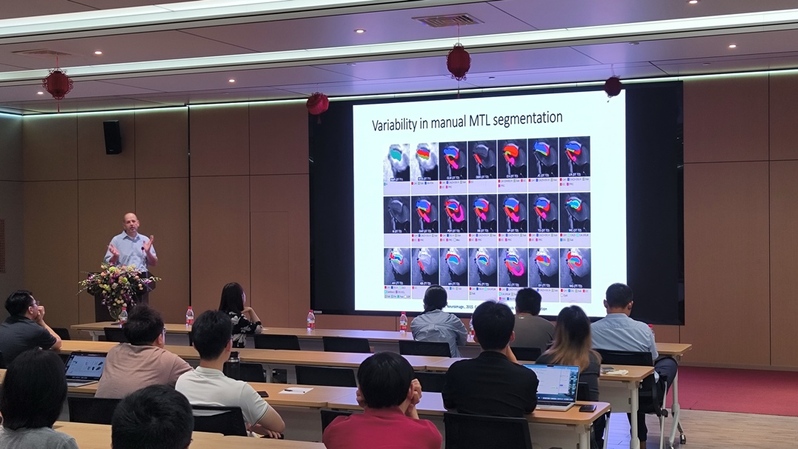
The talk focused on the pathological characteristics of Alzheimer's disease and provided an in-depth analysis of how comorbid pathologies in Alzheimer's disease interfere with current approaches to early diagnosis and treatment. To address this challenge, Professor Paul Yushkevich introduced the latest advances made by his team in investigating Alzheimer's disease comorbid pathologies through magnetic resonance imaging techniques in both in vivo and postmortem settings.
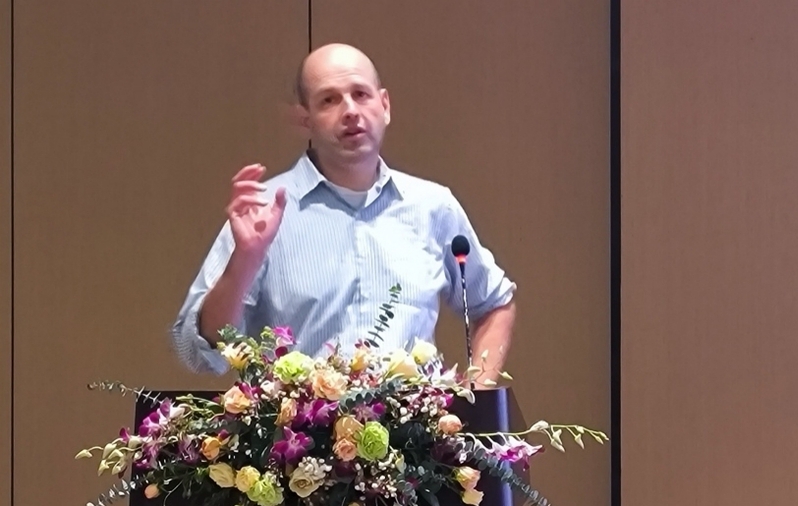
With extensive expertise in computational pathology, image segmentation algorithms, and postmortem brain studies, Professor Yushkevich's team has achieved significant breakthroughs in several cutting-edge areas, including distinguishing comorbid pathologies from conventional Alzheimer's disease pathology in in vivo studies, as well as conducting postmortem magnetic resonance imaging and pathological analyses of the hippocampus and medial temporal lobe. The team's findings highlight that the impact of Alzheimer's disease comorbid pathologies must be fully considered in clinical treatment. Meanwhile, through postmortem brain studies, the team found that the medial temporal lobe is a key region where multiple neurodegenerative diseases are highly concentrated and represents a critical area for understanding the heterogeneity of Alzheimer's disease.