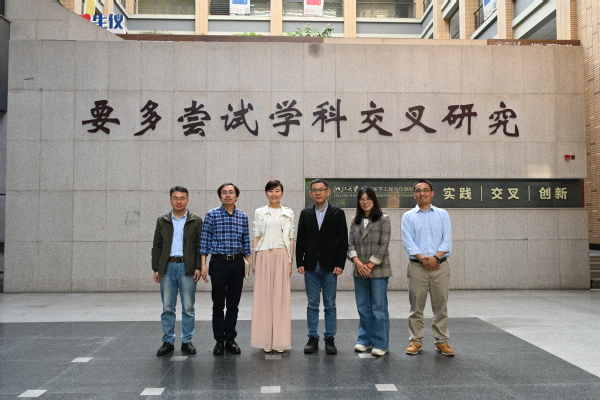
On the afternoon of April 27, 2026, the 38th Lv Weixue Academic Forum was grandly held in the first-floor lecture hall of the Zhou Yiqing Building at Zhejiang University. The forum invited Professor Liu Xiuyun, Chair Professor at Tianjin University, Deputy Director of the Health Science Center, and Dean of the School of Pharmacy, as the keynote speaker. The forum was hosted by Professor Zhou Hong, Secretary of the CBEIS Party Committee, and was attended by Vice Dean Professor Xu Yingke along with more than sixty faculty and student representatives from the college. Under the title New Advances in Diagnosis and Treatment Technologies for Severe Neurological Conditions, Professor Liu Xiuyun drew on her team's extensive expertise in brain-computer interfaces to systematically present the cutting-edge applications of interdisciplinary medical-engineering technologies in clinical neurosurgery.
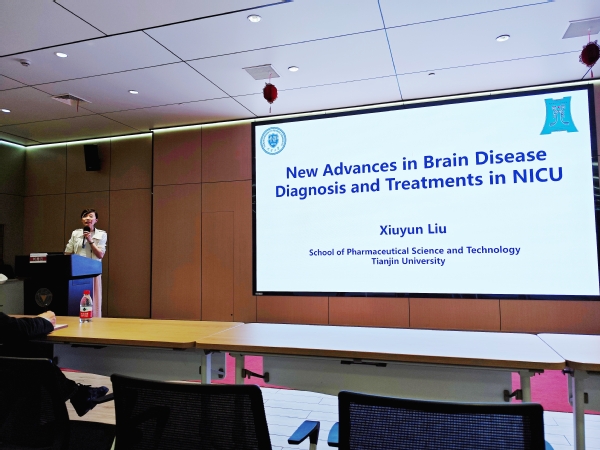
At the outset of her talk, Professor Liu Xiuyun began with clinical pain points, offering an in-depth analysis of the extreme fragility of brain tissue in patients with severe neurological conditions and the rapidly changing nature of their illness. Drawing on her team's deep accumulated expertise at the intersection of medicine and engineering, she elaborated in detail on how frontier engineering technologies can empower clinical medicine. Professor Liu Xiuyun emphasized that the essence of integrating medicine and engineering lies in engaging deeply with clinical scenarios, using engineering methods to translate complex neural signals into quantifiable, actionable clinical decision-support information, thereby enabling a leap forward in care—from life support to functional protection.
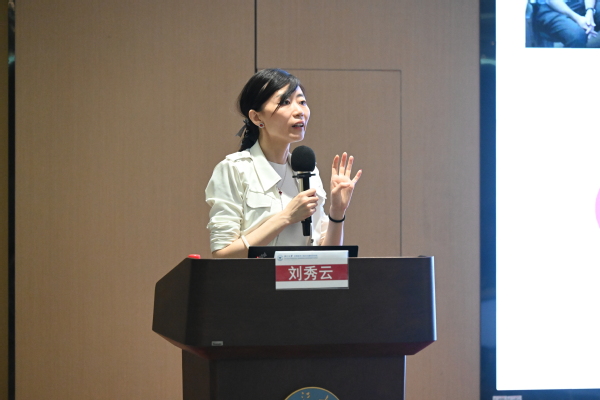
As chief scientist of a National Key Research and Development Program project, Professor Liu Xiuyun focused on sharing her Tianjin University team's recent research achievements and clinical translational breakthroughs in the field of brain-computer interfaces. She described in detail how her team, through the integration of medicine and engineering, has achieved precise capture and dynamic analysis of brain states in patients with severe neurological conditions. These new technologies not only improve diagnostic efficiency in intensive care settings but also provide a scientific basis for subsequent precision diagnosis and treatment plans, demonstrating the tremendous potential of brain-computer interface technology in clinical medicine.